20. November 2025
Image Segmentation Techniques Compared: U-Net, Mask R-CNN, and Beyond
Image Segmentation Techniques Compared: U-Net, Mask R-CNN, and Beyond
In today’s world of advanced technology and artificial intelligence, image segmentation plays a crucial role across various industries. From medical imaging to autonomous vehicles, accurate image segmentation can make all the difference in achieving reliable results. In this article, we will dive deep into three prominent techniques: U-Net, Mask R-CNN, and other emerging methods.
What is Image Segmentation?
Image segmentation involves partitioning an image into multiple segments (sets of pixels), to simplify analysis by reducing the amount of data while preserving meaningful details. This process is vital in applications ranging from medical diagnostics to autonomous driving systems.
Why Use Different Techniques for Image Segmentation?
Each technique has its strengths and weaknesses depending on the specific application requirements, such as real-time performance or precision accuracy. Understanding these differences helps in choosing the right tool for the job.
U-Net: A Game-Changer in Medical Imaging
U-Net is a deep learning-based approach that excels particularly in medical image analysis due to its high level of detail and precision. It uses a contracting path followed by an expansive path, allowing it to capture both context and fine details effectively.
Key Features of U-Net
- Symmetry: The architecture mirrors the VGG network but with skip connections from the contracting path to the expansive path.
- Skip Connections: These help in maintaining spatial information and reducing loss during upscaling stages.
- Efficiency: Requires fewer parameters compared to other models, making it faster to train.
How U-Net Works
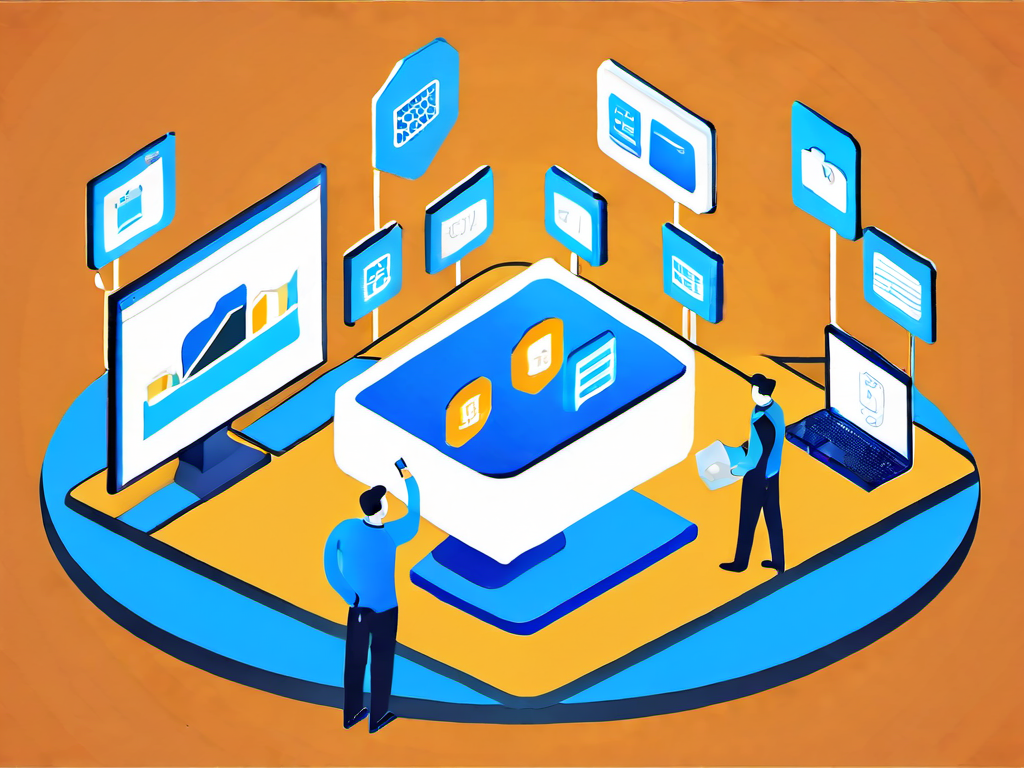
U-Net operates through a series of convolutional layers that downsample the image (contracting path) followed by an expansive path with upsampling operations. Skip connections from each level in the contracting path are concatenated to corresponding levels in the expanding path, ensuring high-resolution feature maps.
Applications of U-Net
- Medical Imaging: Detecting tumors, lesions, and other abnormalities.
- Biomedical Research: Analyzing cell structures and patterns.
Mask R-CNN: Combining Object Detection with Segmentation
Mask R-CNN is an extension of Faster R-CNN that adds a branch for predicting object masks in parallel to the existing branches for bounding box classification and regression. This makes it effective not just for detection but also segmentation tasks.
Key Features of Mask R-CNN
- Multi-Task Learning: Performs simultaneous object detection (bounding boxes) and instance segmentation.
- RoIAlign Layer: Ensures pixel-accurate segmentations by using bilinear interpolation instead of nearest neighbor sampling.
- Flexibility: Can handle multiple object categories and instances within a single image.
How Mask R-CNN Works
Mask R-CNN builds upon the Faster R-CNN framework but adds an additional branch for segmentation masks. It processes regions of interest (RoIs) through convolutional layers to produce class-specific segmentations, alongside bounding box coordinates.
Applications of Mask R-CNN
- Security Systems: Identifying and segmenting objects in surveillance footage.
- Agriculture: Monitoring crop health and identifying diseases.
Beyond U-Net and Mask R-CNN: Emerging Techniques
While U-Net and Mask R-CNN are leading techniques, advancements continue to push the boundaries of image segmentation. Here’s a look at some emerging methods:
DeepLab V3+
DeepLab V3+ improves upon its predecessor by using atrous (dilated) convolutions combined with ASPP (Atrous Spatial Pyramid Pooling). This allows for multi-scale feature extraction and maintains high spatial resolution.
Attention Mechanisms in Segmentation
Recent studies incorporate attention mechanisms to focus on specific areas of an image, improving the model’s ability to capture important features while ignoring irrelevant ones. Techniques like Self-Attention GAN (SAGAN) are being adapted for segmentation tasks.
Comparing Performance Metrics
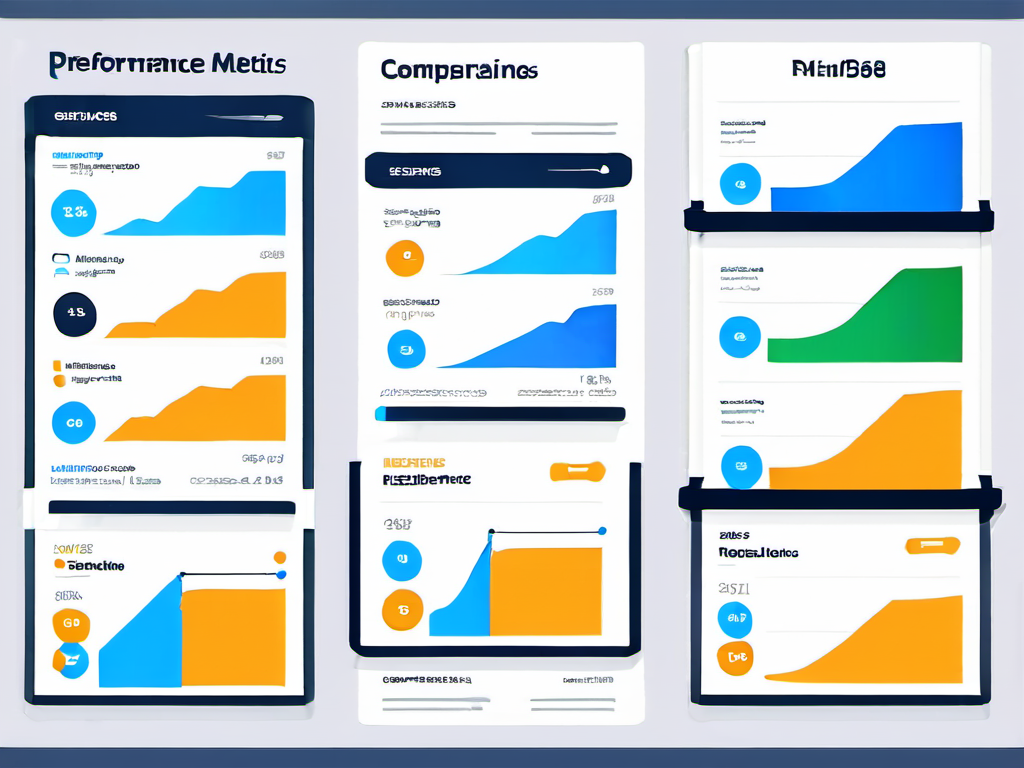
When evaluating these techniques, several key performance metrics come into play:
- Intersection over Union (IoU): Measures how well the predicted segmentation overlaps with ground truth.
- Precision and Recall: Evaluate the accuracy of positive predictions and the completeness of detection respectively.
- Runtime Efficiency: Important for real-time applications like autonomous driving.
Real-World Case Studies
Medical Imaging
In a study published in Nature, U-Net was used to segment brain tumors with high precision, outperforming traditional methods by identifying subtle tumor boundaries more accurately.
Autonomous Vehicles
Tesla’s neural network architecture leverages advanced segmentation techniques similar to Mask R-CNN for real-time object detection and classification on the road. This integration helps in making informed driving decisions.
Overcoming Challenges
Despite their prowess, these techniques face challenges such as:
- Data Availability: High-quality labeled data can be scarce.
- Computational Cost: Training deep neural networks requires significant computational resources.
- Generalization: Models may not perform well on unseen or diverse datasets.
Future Prospects in Image Segmentation
The future of image segmentation looks bright with ongoing research focused on:
- Improving model efficiency and accuracy simultaneously.
- Enhancing generalizability across different domains and data types.
- Exploring novel architectures that integrate attention mechanisms more deeply.
Conclusion
In conclusion, U-Net and Mask R-CNN stand out as powerful tools in the realm of image segmentation, each offering unique capabilities suitable for specific applications. As technology advances, emerging techniques like DeepLab V3+ and attention-based models are likely to reshape how we approach these challenges. Whether you’re tackling medical imaging or developing autonomous systems, staying informed about these advancements can help you make better-informed decisions.
By understanding the nuances of each technique and its real-world implications, professionals across various fields can leverage image segmentation more effectively to achieve their goals.